

 Slovenian Police · Slovenia
Specialna enota policije (Rdeči panterji)
Counter-terrorism · hostage rescue · 1973
 ATLAS Network — European counter-terror unit
The Special Police Unit (Specialna enota policije), universally known by its nickname the “Red Panthers” (Rdeči panterji), is Slovenia's national counter-terrorism and hostage-rescue force. Established in 1973, it is integrated directly into the General Police Directorate and reports to the Director General of the Police. It operates across the whole territory of Slovenia and is deployed for the highest-risk work the ordinary police cannot handle — terrorist threats, armed and dangerous criminals, hostage situations and the protection of top state officials.
The unit's operators played a notable part in Slovenia's road to independence. In 1990 they secured the sealed-off Gotenica complex; during the 1991 Ten-Day War they were active at Trzin, Toško čelo, Depala vas and Krakovski gozd, protected national and foreign leaders during the independence talks, and helped guarantee the safe withdrawal of the last Yugoslav People's Army soldiers from the country — a task completed in the port of Koper on 26 October 1991.
Headquartered on the north-western edge of Ljubljana, the unit is built around a central command and three departments: an Operations Department (the assault and tactical operators), a Support Department (logistics, training and technical specialists) and a Bomb-Disposal Department (EOD). The 'go' order is given whenever a threat to the public, to police officers or to the state exceeds the reach of regular units — terror attacks, high-risk missions or serious crime.
Candidates apply voluntarily and face a selection process lasting several days — physical-performance and shooting tests, an interview, a medical endurance examination, a psychological assessment and background vetting. Those who pass begin roughly eight months of basic training: fitness and martial arts, marksmanship, mission tactics, mountaineering, diving, handling of improvised explosive devices, and abseiling and fast-roping from helicopters. Every operator then specialises in at least one field — diving, mountain and cave rescue, sniping, dog handling, breaching, driving special vehicles or combat medicine.
Today the Red Panthers run on the order of a hundred missions a year, many of them acute interventions, with roughly a third involving dangerous criminals; the bomb-disposal branch alone answers around four hundred call-outs annually. The unit has also served abroad on international mandates — UNMIK in Kosovo (2001–2008) and EULEX Kosovo since 2008 — carrying out counter-terrorism tasks, arrests of war criminals, and VIP and witness protection.
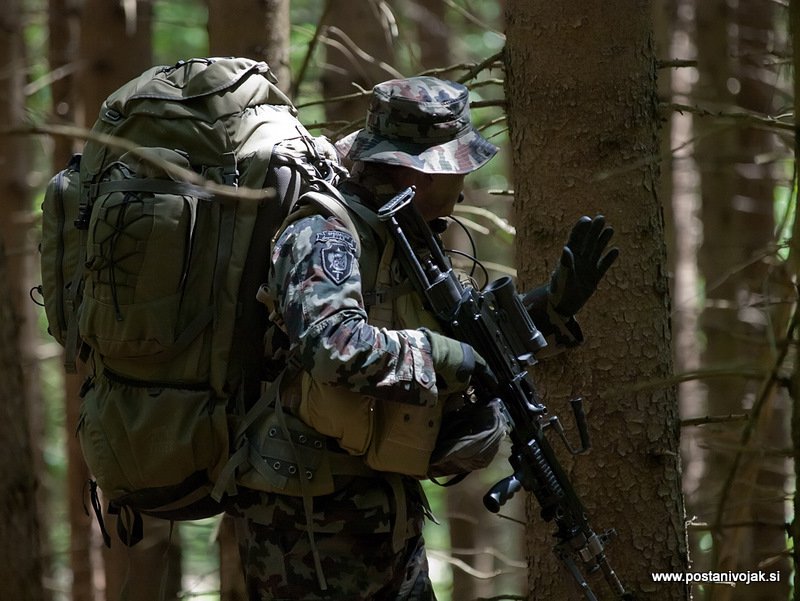
Operators carry the Heckler & Koch HK416 (5.56 mm) as their standard rifle, backed by the HK MP5 (9 mm) sub-machine gun and the SIG Sauer P226 (9 mm) sidearm; the unit's snipers field the Sako TRG, Blaser R93 Tactical-2, Accuracy International AW, HK G28 and HK417. Since 2004 the Red Panthers have been part of the European ATLAS Network of elite counter-terror units.
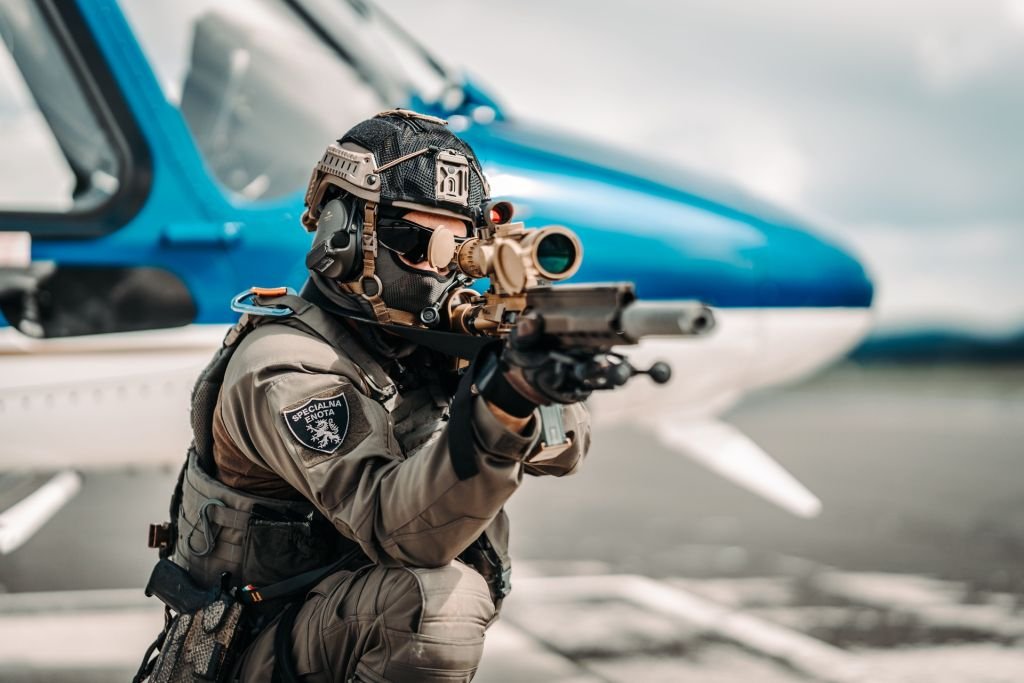
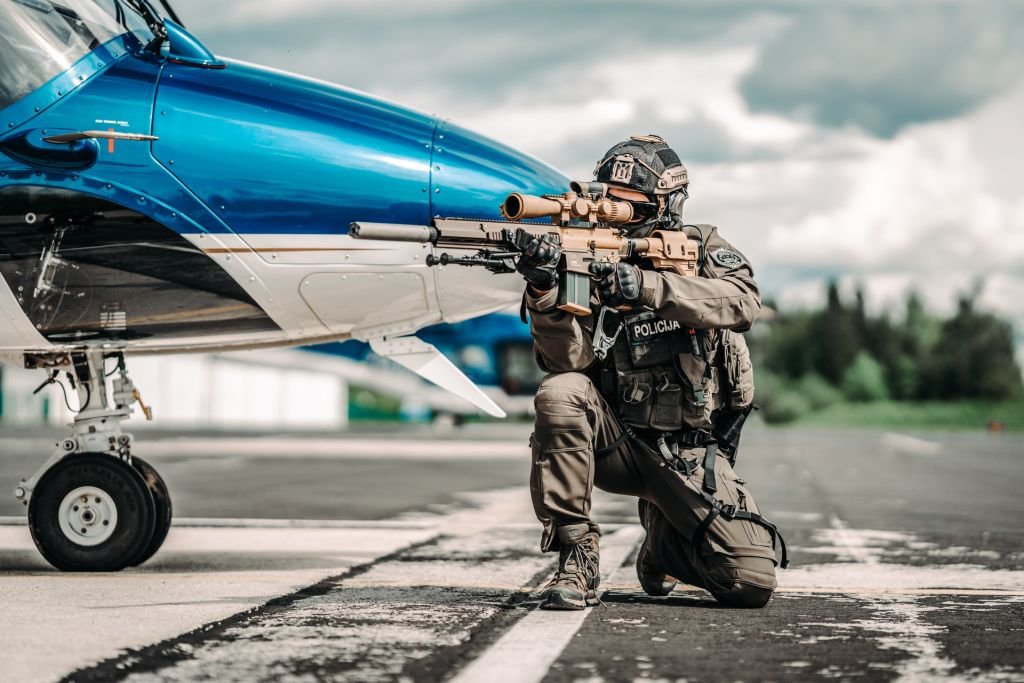

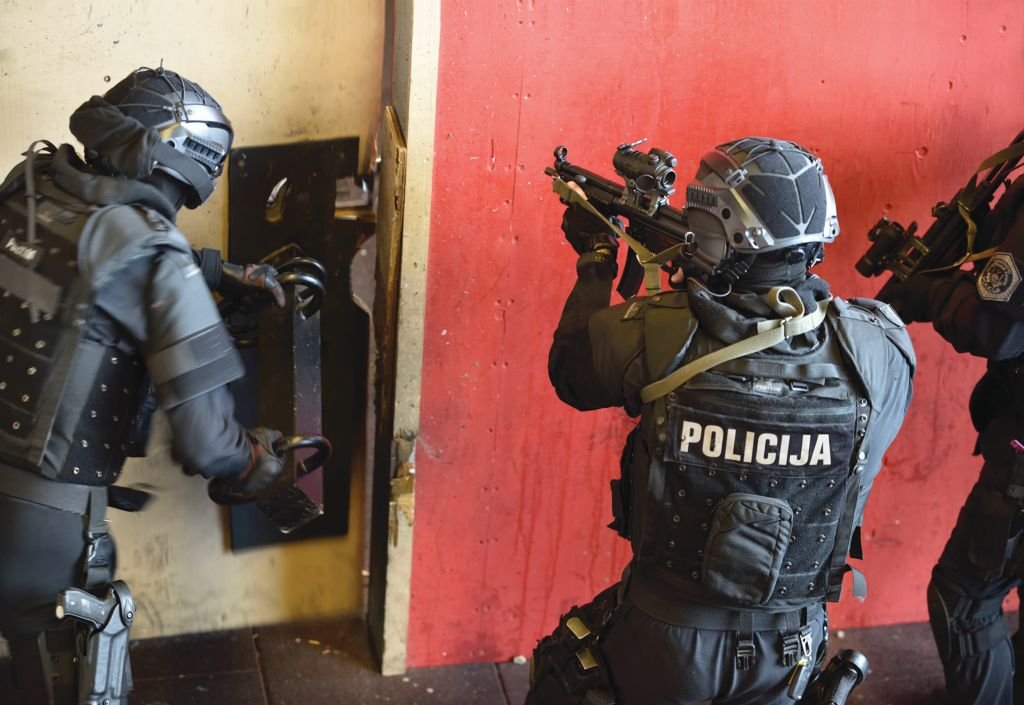
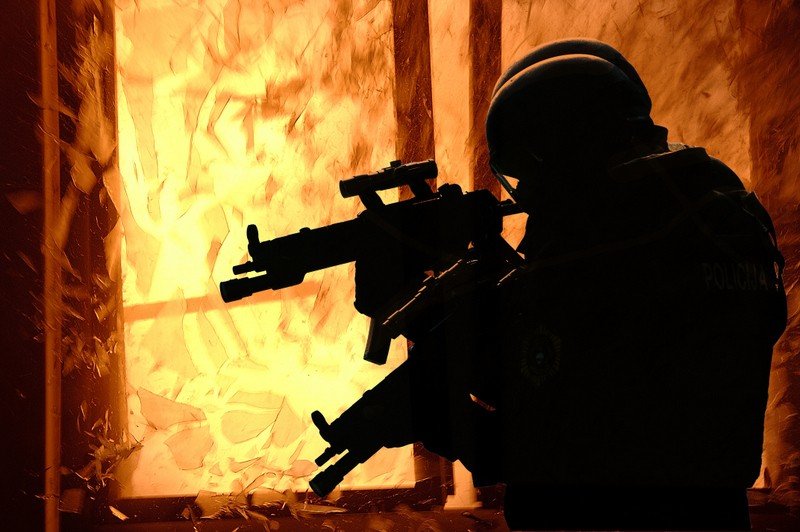
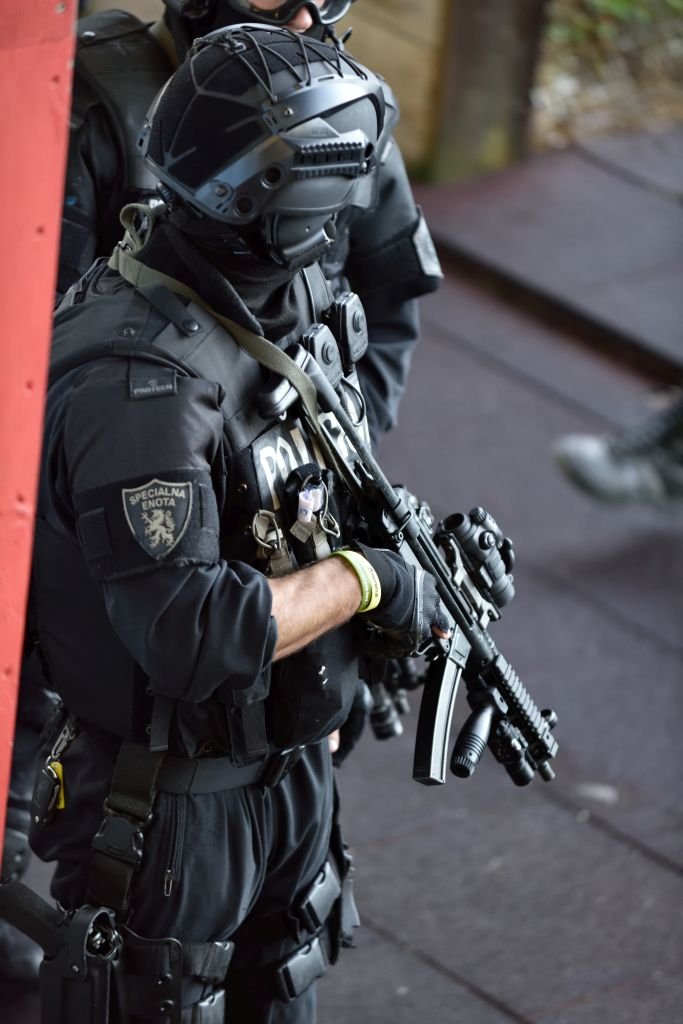


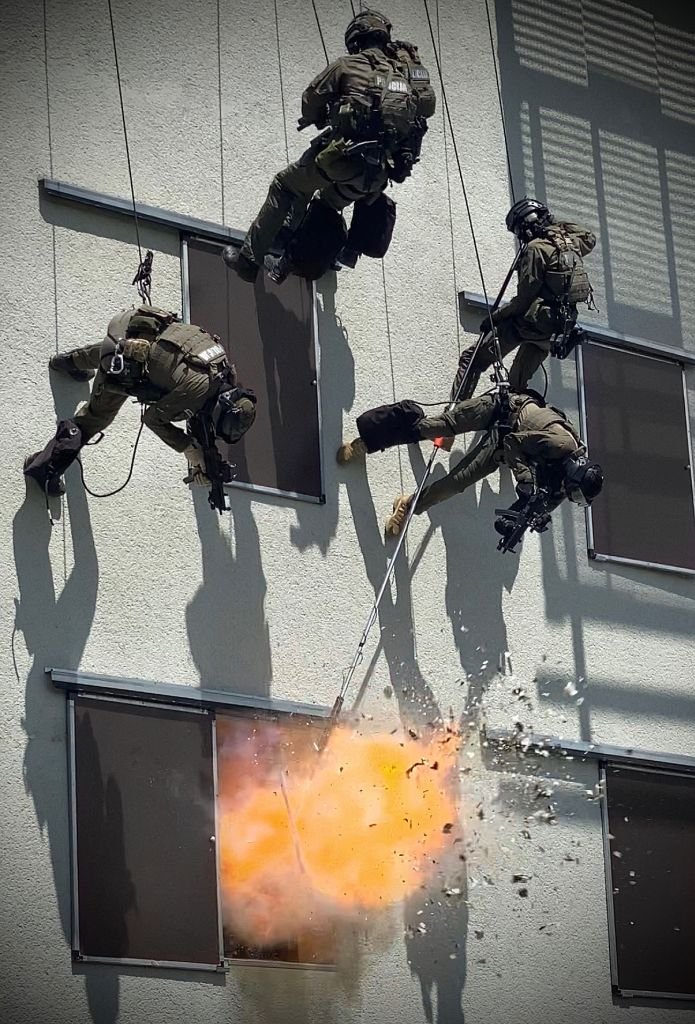

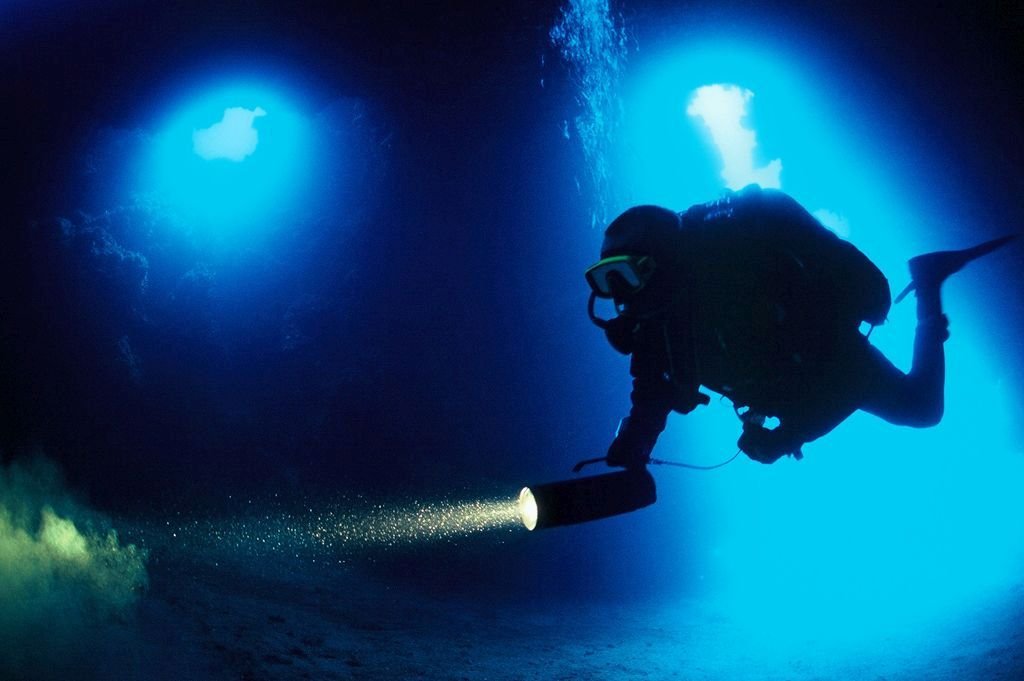
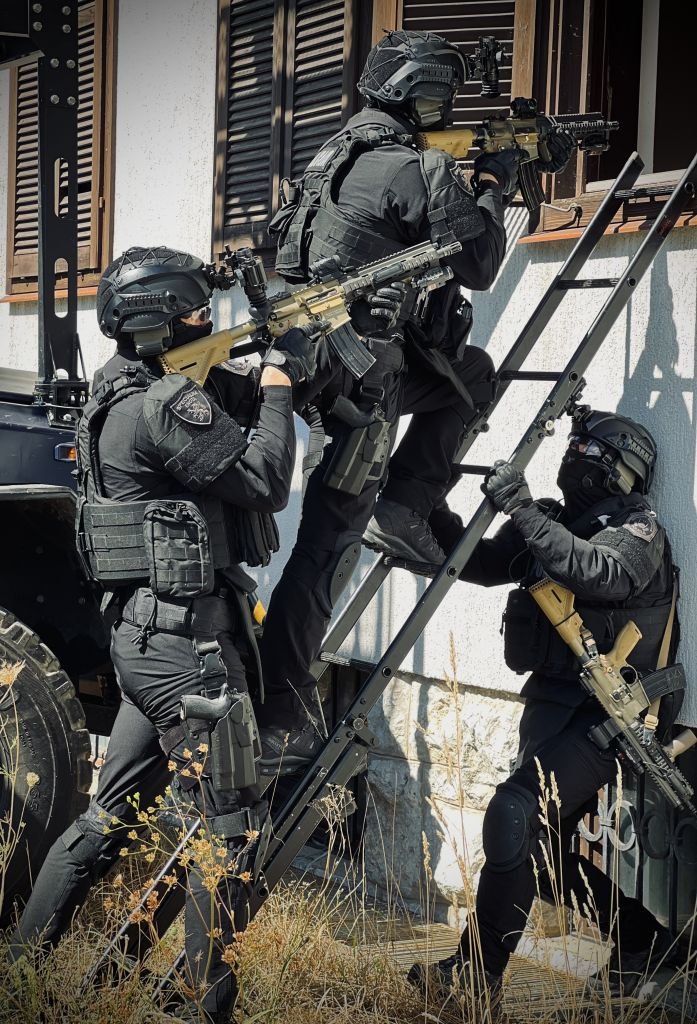
Foto: Slovenska policija (Uroš Podlogar, Andraž Segš, Specialna enota)