
Tommy Prince
“Prince of the Brigade” · Canada · First Special Service Force
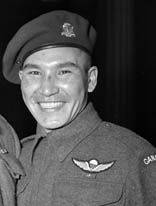
Tommy Prince was born on the Brokenhead Ojibwe Nation in Manitoba, a great-great-grandson of Chief Peguis, and grew up hunting to feed the family. He could shoot the head off a duck at a distance nobody believed until they watched him do it. He volunteered in 1940, went to the parachute school, and was picked for the First Special Service Force — the American-Canadian unit the Germans called the Black Devils and history calls the Devil's Brigade.
In February 1944, at Anzio, he ran a telephone wire fifteen hundred metres out to an abandoned farmhouse a hundred and thirty metres from four German artillery positions and reported fire onto them for three days. When a shell cut the wire in daylight, he pulled on a farmer's clothes he found in the house, walked out into the open in full view of the German guns, and pretended to weed the ground — bending over the break, tying the ends together, shaking his fist at both armies for good measure. The four positions were destroyed. He was awarded the Military Medal.
That September, in southern France, he walked seventy kilometres over three days through the mountains behind German lines, with no food and no sleep for the last stretch, and brought back the reconnaissance that let a battalion take an enemy bivouac and a hundred prisoners. For that he received the American Silver Star. He was one of only three Canadians in the war to hold both.
He went back for Korea with the Princess Patricia's, fought at Kapyong, wrecked his knees, and came home for good. And then the country that had decorated him in the field returned him to a reserve where a First Nations veteran could not vote, could not legally buy a drink to mark it, and received a fraction of the settlement land given to other soldiers. His businesses failed. His marriage failed. He sold his medals.
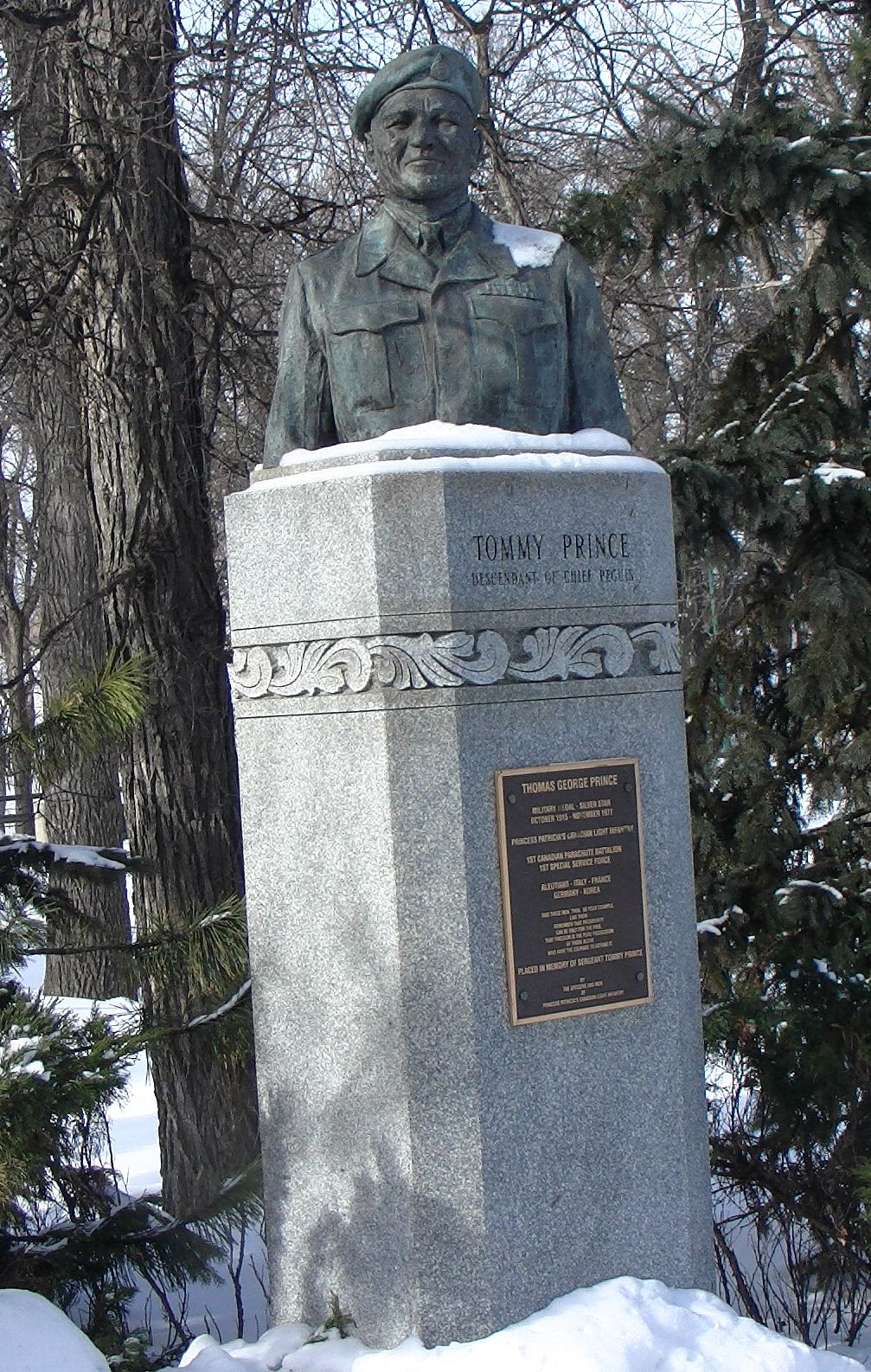
He chaired the Manitoba Indian Association and argued in Ottawa for the abolition of the Indian Act and for the Crown treaties to be honoured — a position then dismissed as radical and since upheld by the Supreme Court. He died in a Salvation Army hostel in Winnipeg in 1977. Five hundred people came to the funeral, including the Lieutenant-Governor of Manitoba and the consuls of France, Italy and the United States. There is a school, a barracks and a monument named for him now.
Foto: Wikimedia Commons · Wikipedia