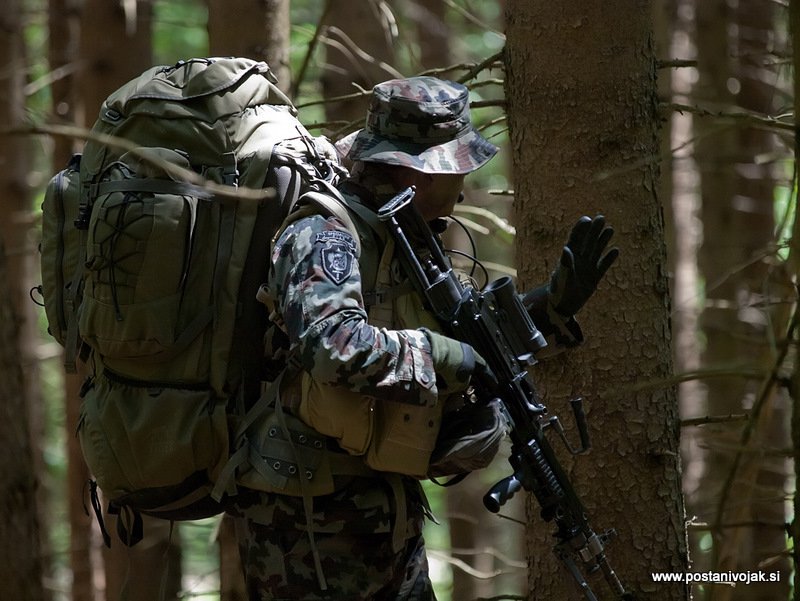




Roy Benavidez was orphaned by tuberculosis at seven, raised by an uncle in El Campo, Texas, with eight cousins, shined shoes at the bus station and left school at fifteen to work full time. He enlisted in the National Guard at seventeen and went active in 1955. In 1965, on his first tour in Vietnam, he stepped on a landmine; the doctors told him he would not walk again. He spent nights crawling out of his hospital bed to practise until he could, went to Special Forces, and returned.
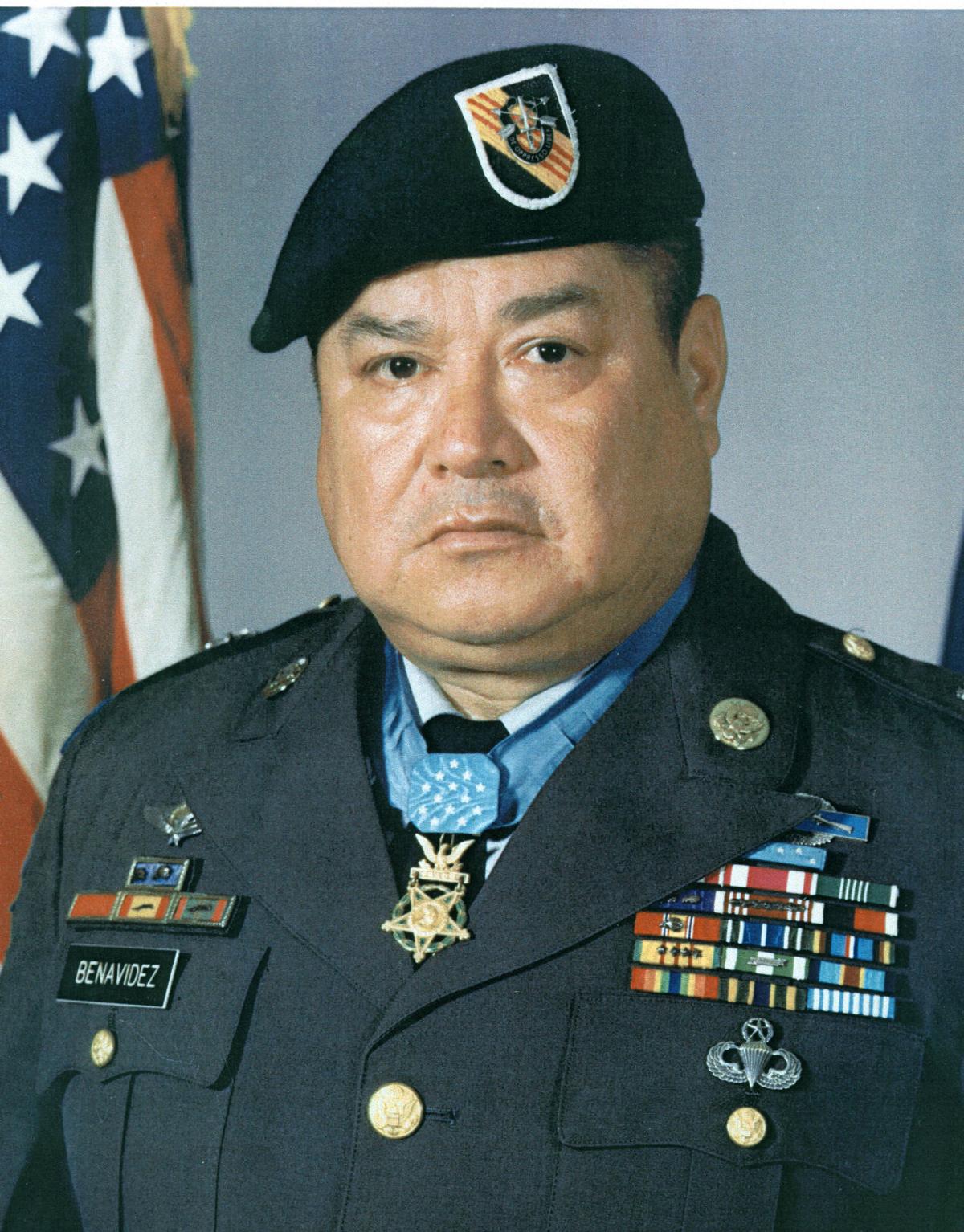
On 2 May 1968 a twelve-man Special Forces reconnaissance team was surrounded by a North Vietnamese battalion near Loc Ninh. Three helicopters had already been driven off. Benavidez heard it on the radio at Loc Ninh, ran to the next helicopter with nothing but a knife and a medical bag, and jumped out of it into the treeline.
What followed took six hours. He was shot in the face, head and leg before he reached the team; he carried and dragged the wounded to the aircraft, called air strikes, recovered classified documents from the dead team leader, was hit again, was blown off his feet by a grenade when a helicopter crashed, organised the survivors into a perimeter, fought hand to hand with an enemy soldier who bayoneted him — and killed him with his knife. When they finally lifted him out he was holding his own intestines in his hand.
The doctor at the field hospital assumed he was dead and was about to zip the bag when Benavidez spat in his face — the only movement he could make. He had thirty-seven separate puncture, bullet and shrapnel wounds. Eight men came out of that clearing alive because of him.
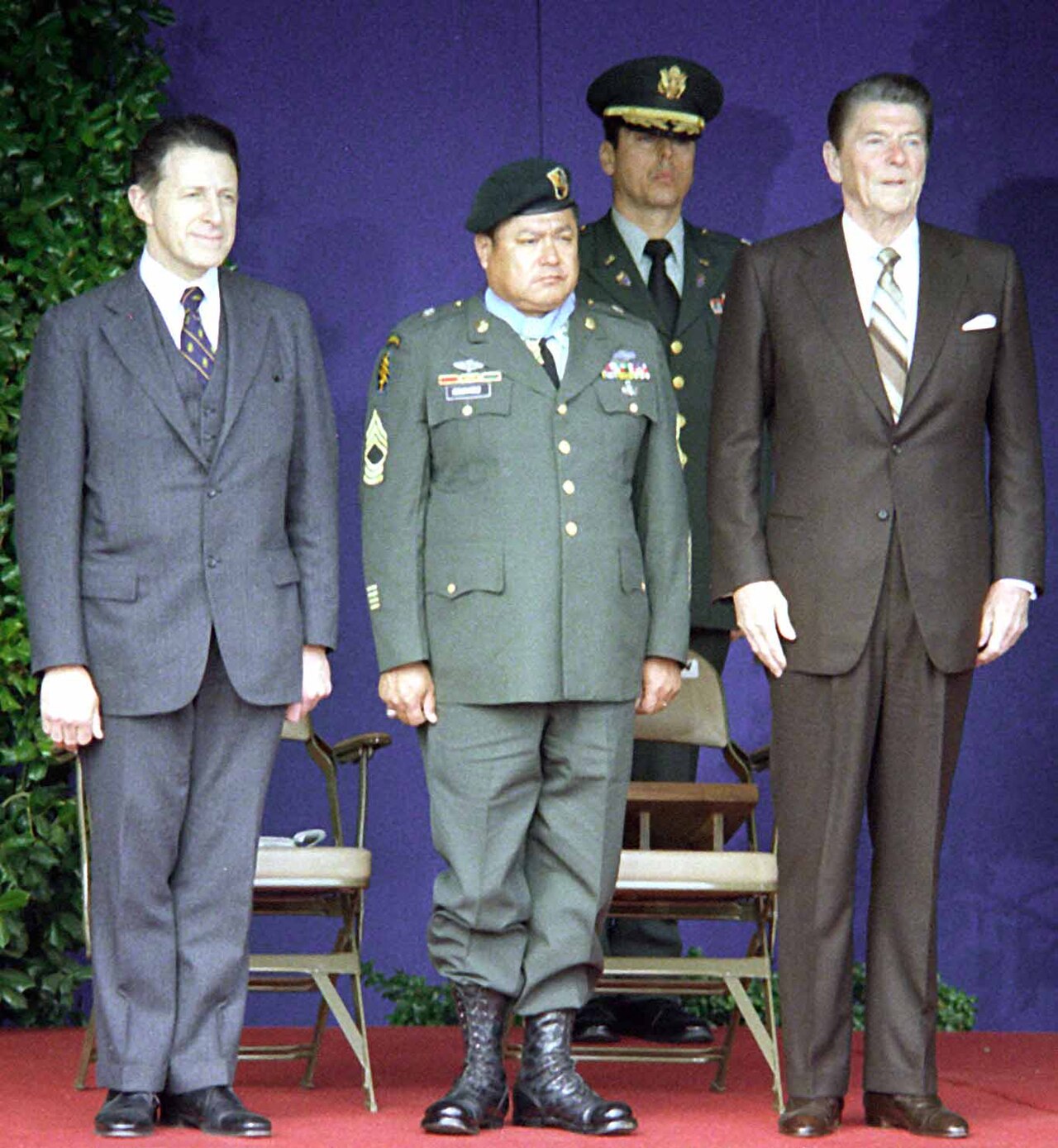
The paperwork went in for the Distinguished Service Cross, because the survivors who could describe what he did were in a programme that did not officially exist. It took until 1981 for the Medal of Honor to be approved, and President Reagan, reading the citation before the ceremony, said that if the story were a movie nobody would believe it. Benavidez spent the rest of his life speaking in schools, and died in 1998.
Foto: Wikimedia Commons · Wikipedia