
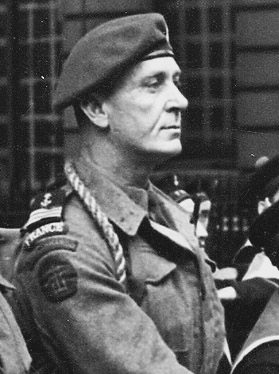

Philippe Kieffer was born in Port-au-Prince to an Alsatian father and an English mother, worked as a bank official, and was forty years old and a naval reservist when he volunteered in September 1939. He served on the battleship Courbet and at Dunkirk, reached London on 19 June 1940, and joined the Free French Naval Forces on the day they were founded.
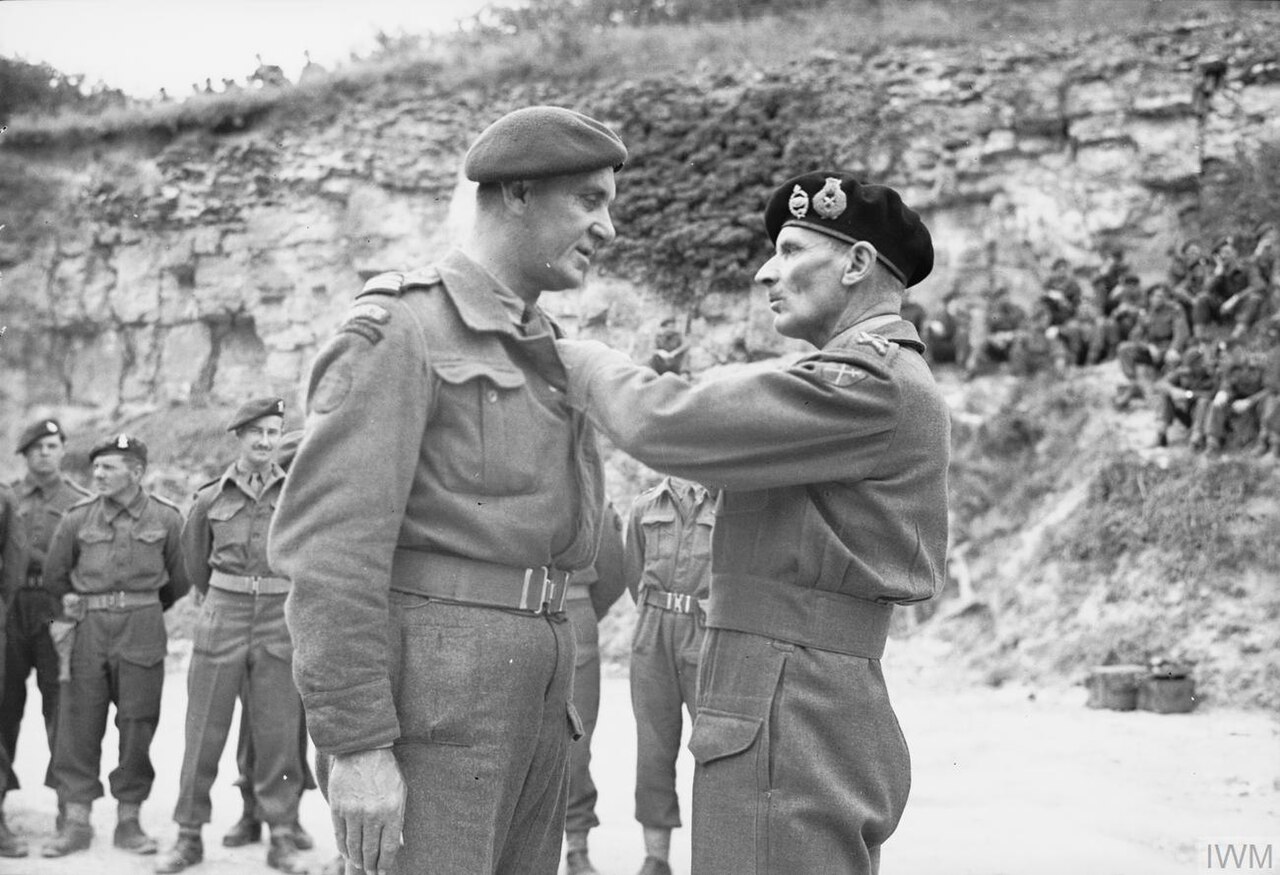
His English was perfect, so he was made a translator and cipher officer, which he hated. What he wanted was what he had seen the British doing: commandos. In May 1941 he talked Admiral Muselier into letting him raise a French unit on the same model, and took his volunteers to Achnacarry in the Scottish Highlands, where the training was hard enough that men died in it. They earned the green beret, and were folded into No. 10 (Inter-Allied) Commando as the 1er Bataillon de Fusiliers Marins Commandos.
They raided the Channel coast, and a company of them went in at Dieppe in 1942. Then Kieffer spent two years arguing for the thing that mattered to him more than any operation: that when the Allies landed in France, Frenchmen would be on the beach in the first wave.
He got it. At 07:30 on 6 June 1944, 177 French commandos came ashore at Colleville-Montgomery, on the Sword sector at Ouistreham, attached to Lord Lovat's No. 4 Commando — the only French troops to land on the beaches that day. Their objective was the fortified casino. Kieffer was wounded in the thigh crossing the sand, had it dressed, fetched a British tank to shoot the strongpoint open, and was wounded again the same day. They took the casino, and by evening had linked up with the paratroopers at Bénouville.
He was made a Compagnon de la Libération, served briefly in politics after the war, and died in 1962. The French Navy's commandos — Commando Hubert, Commando Kieffer and the rest — count themselves his direct descendants, and every one of them still earns the same green beret.
Foto: Wikimedia Commons · Wikipedia