
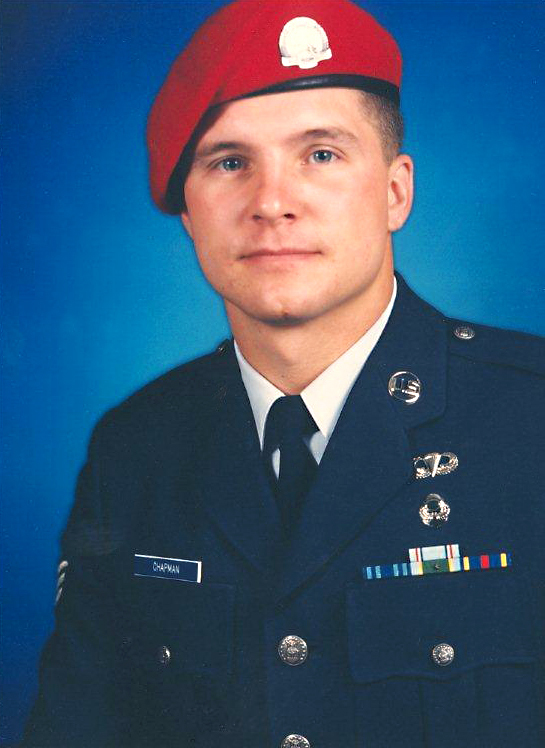
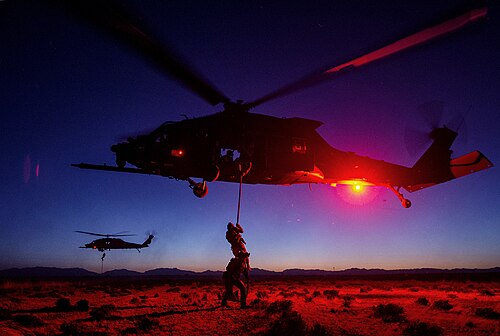
John Chapman was an Air Force combat controller — one of the men who go in with the ground teams to bring in the aircraft, qualified as both an air traffic controller and a commando, and carrying the motto First There. He had enlisted in 1985 as a computer operator and cross-trained into the hardest job the Air Force has.
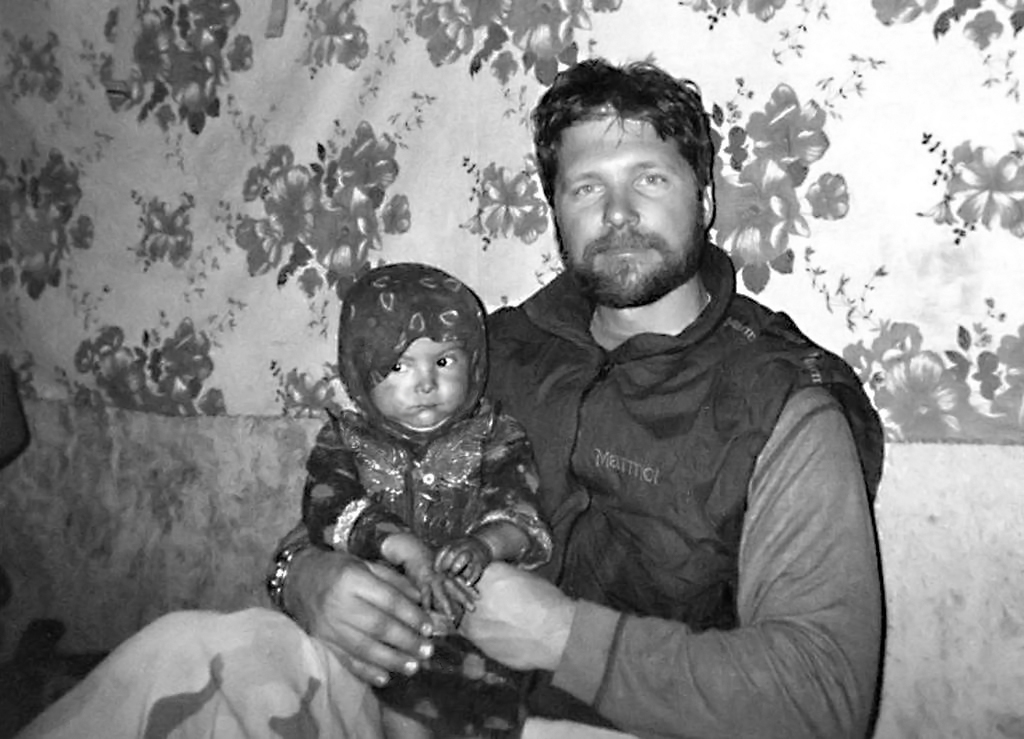
On 4 March 2002, during Operation Anaconda, he was attached to a SEAL team flying onto the peak of Takur Ghar to place an observation post. The mountaintop was held by al-Qaeda. The helicopter was hit going in, and a SEAL, Neil Roberts, fell from the ramp into the enemy position. The team went back for him.
Chapman was the first man off the second helicopter. He assaulted a bunker and cleared it, then attacked a second — and was hit. In the confusion of the fight his team leader, seeing no movement and believing him dead, ordered a withdrawal off the peak with wounded men.

He was not dead. Predator drone footage, re-analysed sixteen years later frame by frame with the help of forensic video experts, showed a lone figure in his position continuing to fight for more than an hour: moving between bunkers, engaging fighters at close range, and finally standing up into automatic fire to draw attention away from an inbound Chinook carrying a Ranger quick reaction force. He was killed doing it; the aircraft and most of the men on board survived.
He was given the Air Force Cross in 2003. In August 2018, after the footage review, it was upgraded to the Medal of Honor — the first airman to receive it since Vietnam. The record of exactly what happened on that mountain remains contested between the services, and the men who were there have told it differently. What is not contested is that he was alone, and that he kept fighting.
Foto: Wikimedia Commons · Wikipedia