
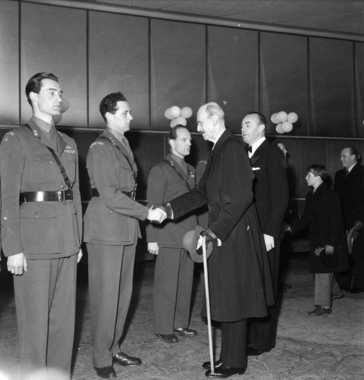
Joachim Rønneberg was twenty-one when he and eight friends took a boat from Ålesund to Scotland to get away from the German occupation. He was trained by the British and folded into Norwegian Independent Company 1 — Kompani Linge — and in the winter of 1943 he was handed a job and told to pick his own men.
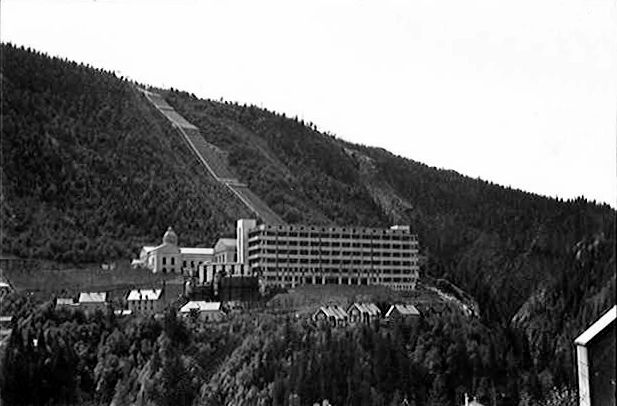
The target was the Vemork plant at Rjukan, the only facility in Europe producing heavy water in quantity, and therefore the German nuclear programme's supply line. A British glider operation had already failed catastrophically: both gliders and a tug crashed, and the survivors were tortured and shot. Four Norwegians of the advance party, Grouse, were still alive on the Hardanger plateau, living on reindeer moss.
On the night of 27 February 1943, Rønneberg's six-man team joined them. Rather than cross the guarded suspension bridge, they climbed two hundred metres down into the icy gorge, waded the river and climbed the other side, then followed the railway track to the fence. Rønneberg cut the padlock with bolt cutters he had bought himself in Cambridge. Two men found their way into the basement through a cable duct, laid charges around the electrolysis cells, and lit a fuse short enough to be sure of the job and long enough to walk out. The explosion was so muffled that the guard barely reacted.
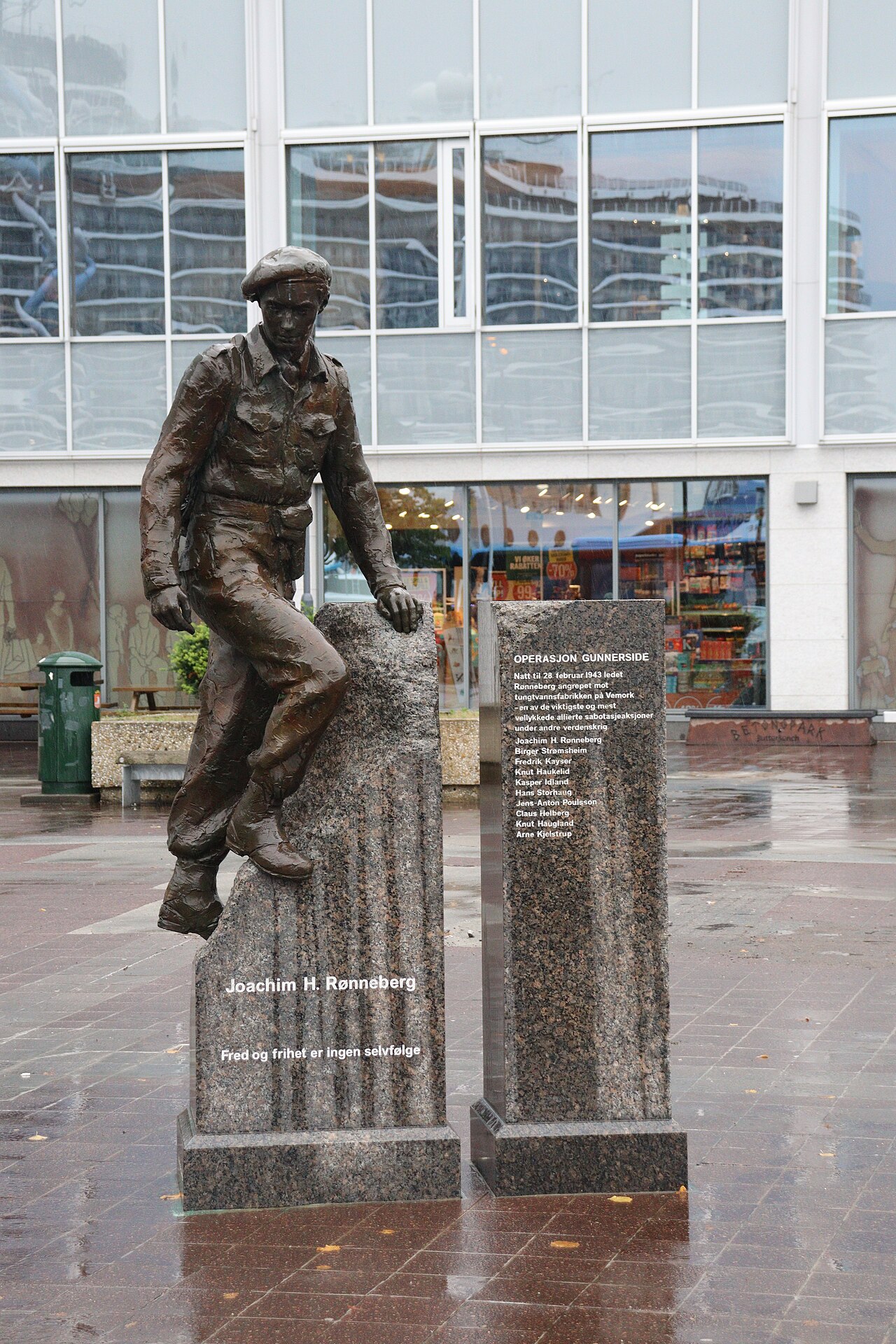
Nobody on either side was killed. Within hours some three thousand German troops were searching the mountains; five of the team skied more than four hundred kilometres across the plateau in winter to neutral Sweden, and the rest stayed in Norway to keep working. Rønneberg was twenty-three.
He spent the next fifty years at the Norwegian Broadcasting Corporation in Ålesund, spoke to schoolchildren about the war until he was in his nineties, and refused to be called a hero: the men who did not come home, he said, were the ones worth the word. He died in 2018, aged ninety-nine, the last of the Gunnerside party.
Foto: Wikimedia Commons · Wikipedia