

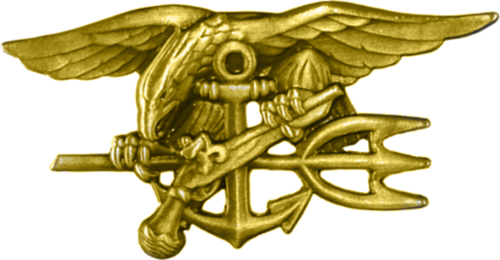
Chris Kyle grew up in Odessa, Texas, with a rifle his father bought him at eight and a job on the family's cattle. He rode broncos professionally until a horse rolled on him and wrecked his arm, walked into a recruiting office meaning to join Marine special operations, and came out on his way to BUD/S instead. He enlisted in the Navy in 1998, was a SEAL by 1999, and went to Iraq in 2003.
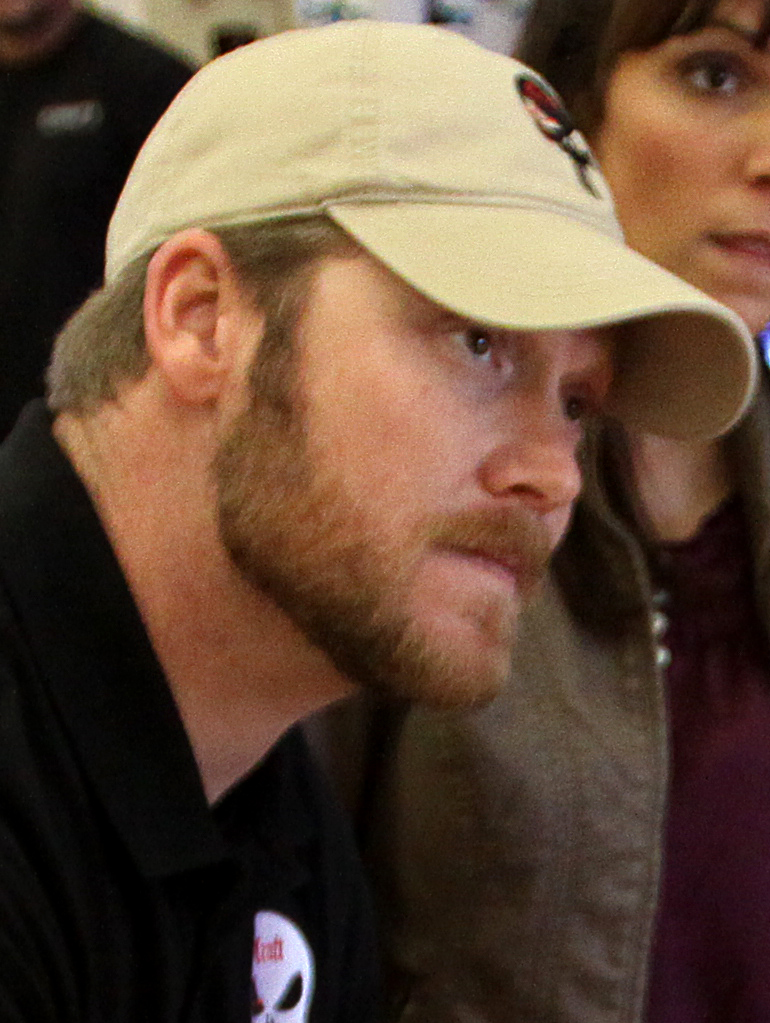
Four tours followed — Nasiriyah, Fallujah, Ramadi, Sadr City. He worked from rooftops and half-collapsed buildings, covering Marines moving below him, and the Pentagon credits him with 160 confirmed kills, the most of any American sniper. He himself claimed more than 250. The insurgents in Ramadi put a bounty on him and gave him a name, al-Shaitan Ramadi, the Devil of Ramadi; his own side simply called him the Legend, a nickname he disliked. He came home with a Silver Star and three Bronze Stars for valour, and left the Navy in 2009.
What he did next made him famous far beyond the teams. American Sniper, published in 2012, sold in the millions and was filmed by Clint Eastwood with Bradley Cooper in the part. It also made him a target of a different kind: several anecdotes in the book — a bar fight with a former governor, shootings in post-Katrina New Orleans — turned out to be unverifiable or invented, and Jesse Ventura sued him successfully for defamation. The catalogue does not pretend otherwise; the record of the man on the rooftops stands on its own.
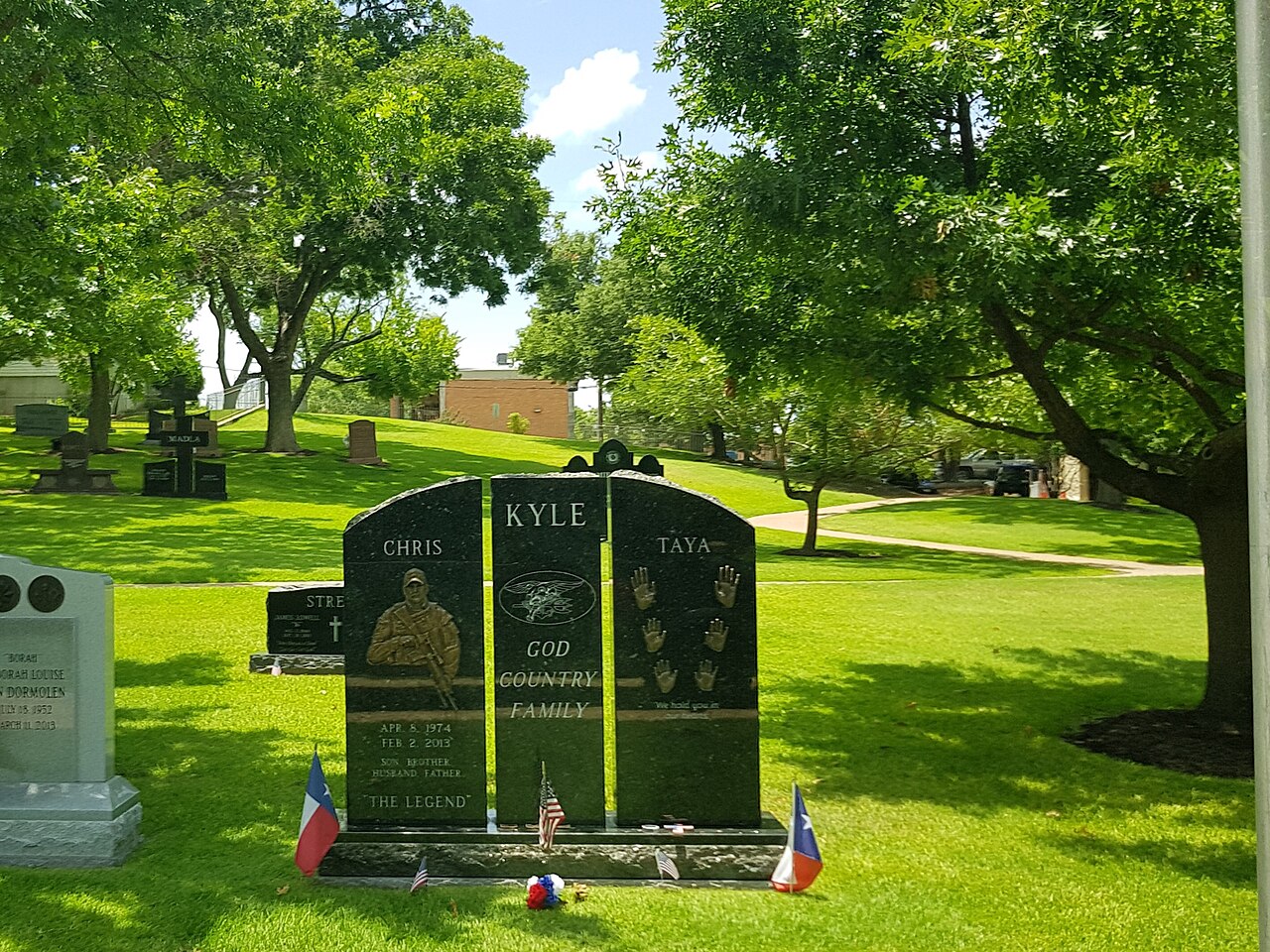
The part of his life that ended it was the quiet part. Out of the Navy, Kyle spent his time with veterans carrying wounds no one could see, taking them shooting because that was the language he had. On 2 February 2013 he drove one of them — Eddie Ray Routh, a former Marine with severe PTSD — to a range at Rough Creek Lodge, south-west of Fort Worth. Routh shot Kyle and his friend Chad Littlefield dead at the firing line. He was convicted of murder and sentenced to life without parole.
Seven thousand people filled the Dallas Cowboys' stadium for the memorial, and the hearse drove two hundred miles to Austin past overpasses lined with people holding flags. Whatever the arguments about the book, that part was not in dispute.
Foto: Wikimedia Commons · Wikipedia