

Britt Slabinski was an Eagle Scout from Northampton, Massachusetts, who enlisted out of a vocational high school in 1988, passed BUD/S in 1990 and spent most of his career at the Naval Special Warfare Development Group. By March 2002 he was a senior chief leading a reconnaissance team into the Shahi-Kot valley for Operation Anaconda.
His team's job was to put an observation post on the peak of Takur Ghar, three thousand metres up in the snow. The mountain turned out to be occupied. Taking fire on the approach, the helicopter lurched, and Petty Officer Neil Roberts slid off the open ramp and fell into the enemy position below.
Slabinski took his team back — a deliberate decision to land on a peak they now knew was held, with six men, against an unknown number of dug-in fighters, because one of theirs was down there. They assaulted uphill into machine-gun fire in waist-deep snow, cleared a bunker, and were driven back with the team badly shot up. Believing his combat controller John Chapman dead, Slabinski ordered a withdrawal down the mountainside carrying his wounded, then directed air strikes onto the peak through the night.
Roberts was already dead when he fell. Seven Americans were killed on that mountain in twenty-four hours, and the battle became the most closely examined small action of the entire Afghan war.
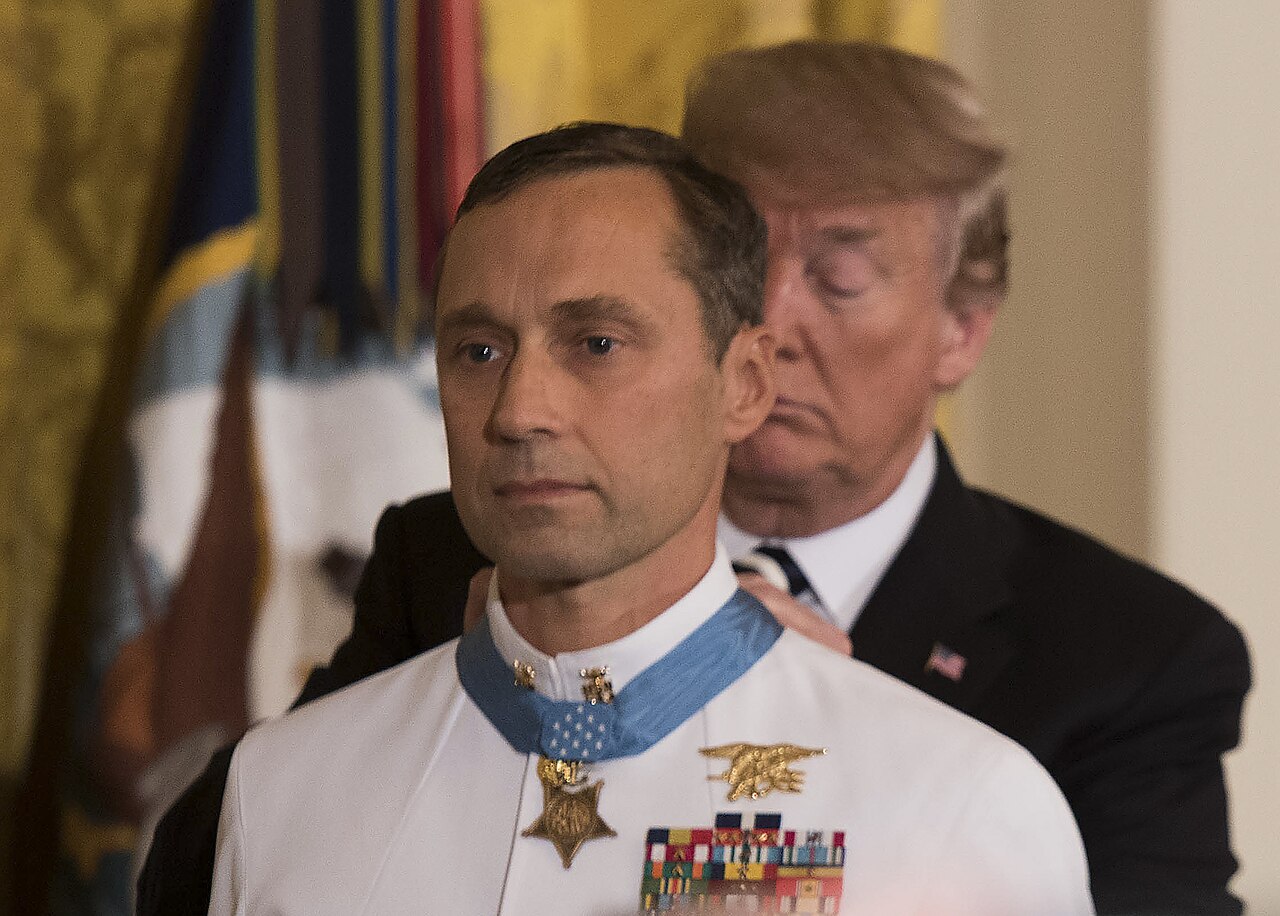
Slabinski received the Navy Cross, and in May 2018 it was upgraded to the Medal of Honor. Three months later Chapman received one too, for what he did after the team left — an outcome that has caused lasting friction between the services and between men who were on the same peak. The catalogue records both awards and both accounts, because both belong to the story.
Foto: Wikimedia Commons · Wikipedia