

Anders Lassen grew up on the Høvdingsgård estate in Denmark, a hunter from childhood who could stalk deer close enough to touch. When Germany occupied his country in April 1940 he was at sea with the merchant navy; he made his way to Britain, enlisted as an ordinary seaman, and was picked out for a unit with a deliberately dull name — the Small Scale Raiding Force, run by the Special Operations Executive.
His first operation, in January 1942, was one of the strangest of the war: Operation Postmaster, the cutting-out of three Axis ships from the harbour of a neutral Spanish island in the Gulf of Guinea, done in the dark with charges and a tug, and officially never done at all. Lassen was commissioned in the field and given an immediate Military Cross.
Then came the Aegean. With the Special Boat Service he raided Crete, Simi, Santorini and half the islands between them, arriving by caique at night, and became known for a fighting knife and a bluntness the British found either magnificent or insubordinate. He was awarded the Military Cross twice more.
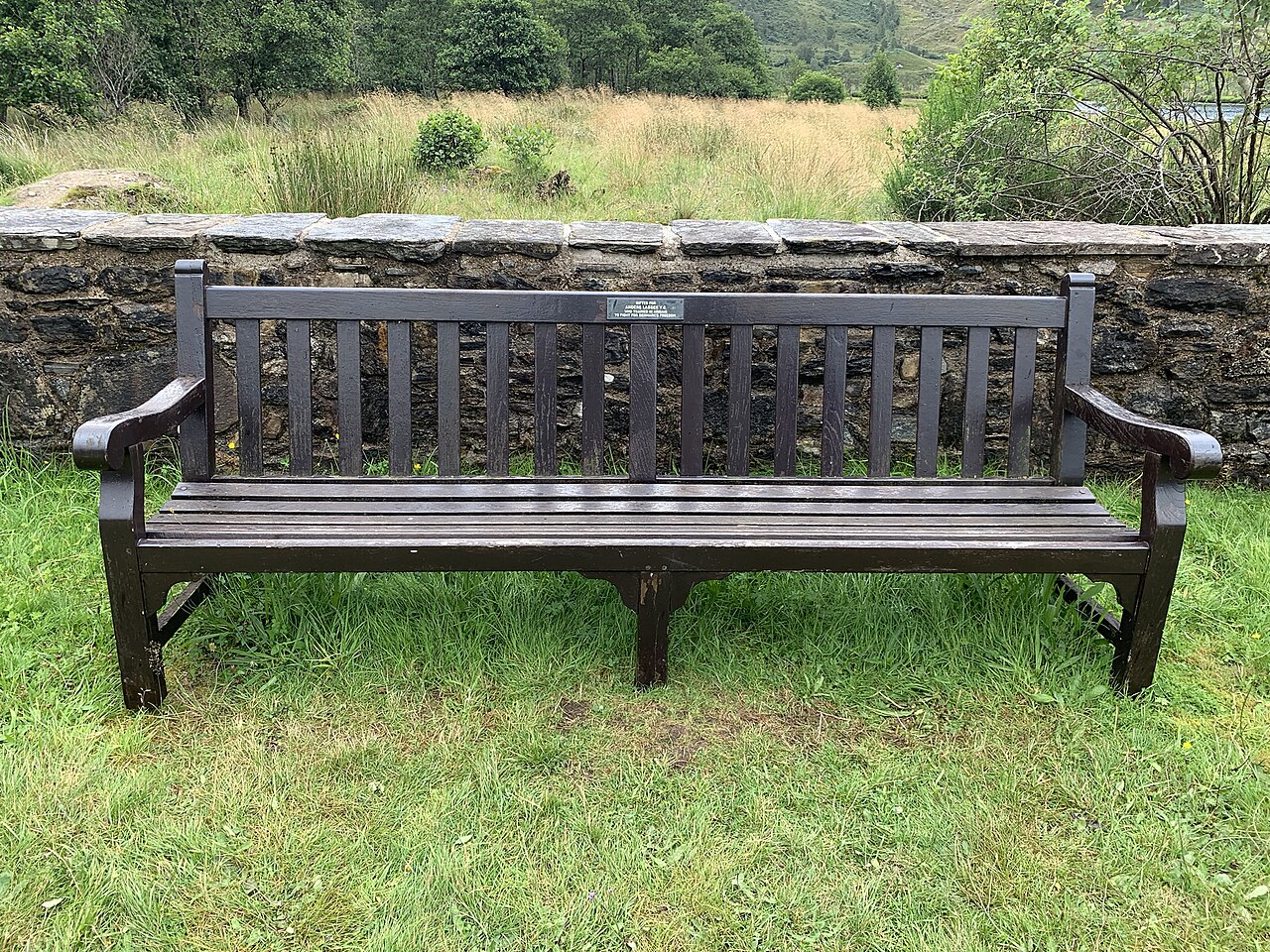
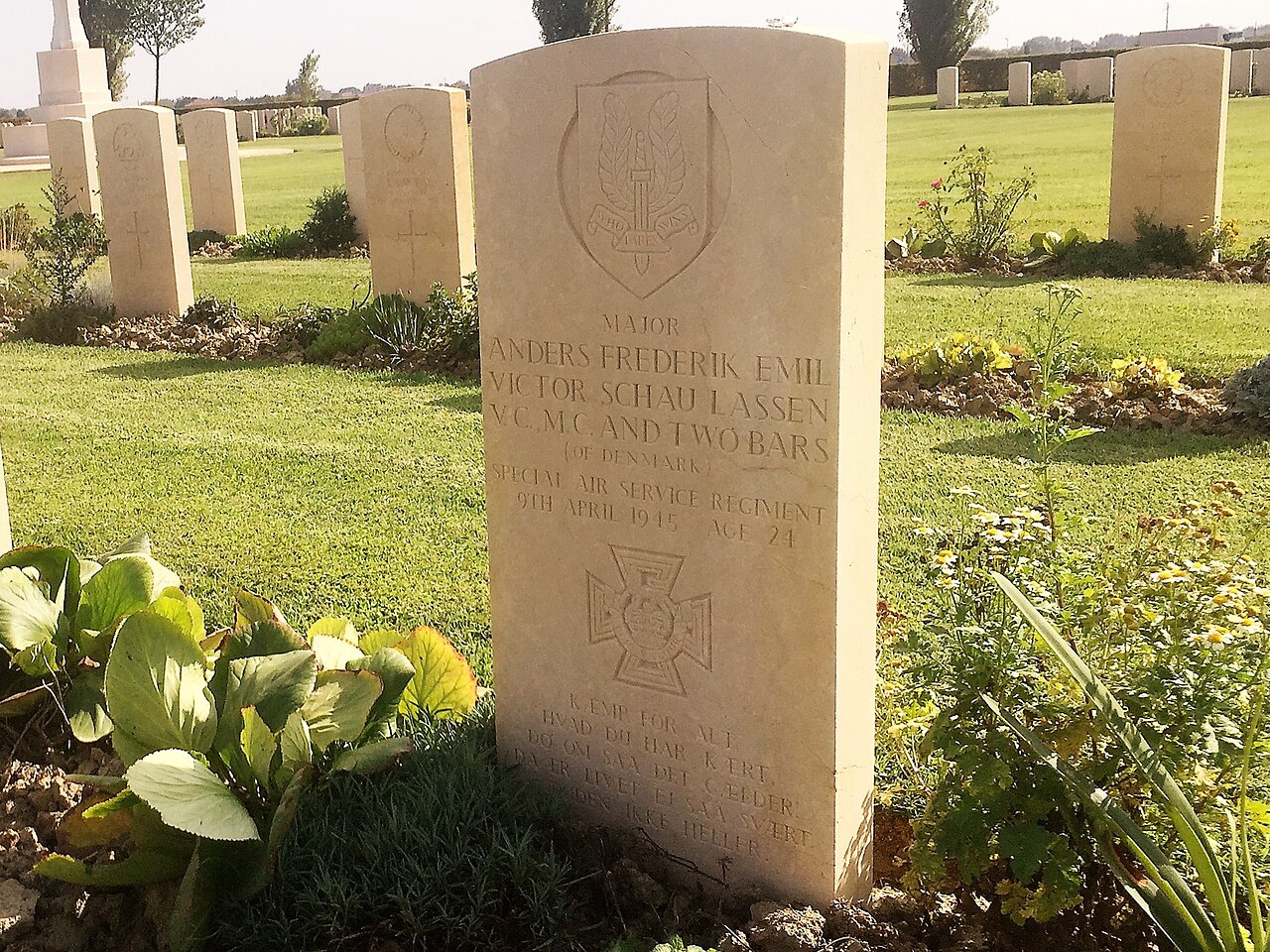
On the night of 8 April 1945 at Lake Comacchio in northern Italy, his patrol of seventeen men was ordered to make enough noise to convince the Germans a full landing was coming. Lassen silenced three machine-gun positions one after another and was hit at close range at the fourth. He refused to be carried out, because a stretcher party would have cost his men the withdrawal. He died there — twenty-four years old, and the only man from outside the Commonwealth to be awarded the Victoria Cross in that war.
His cousin Axel von dem Bussche had tried to kill Hitler with a suicide bomb at a uniform demonstration eighteen months earlier. It was that kind of family.
Foto: Wikimedia Commons · Wikipedia